


Login
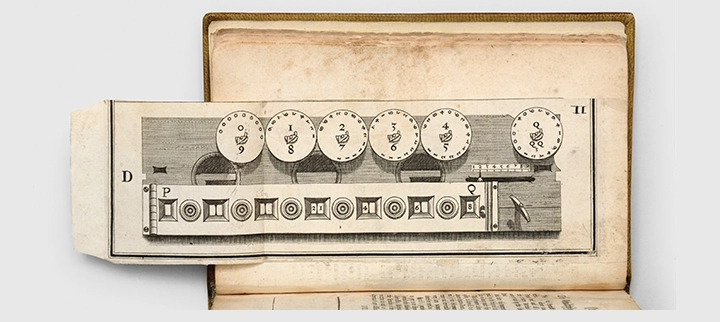
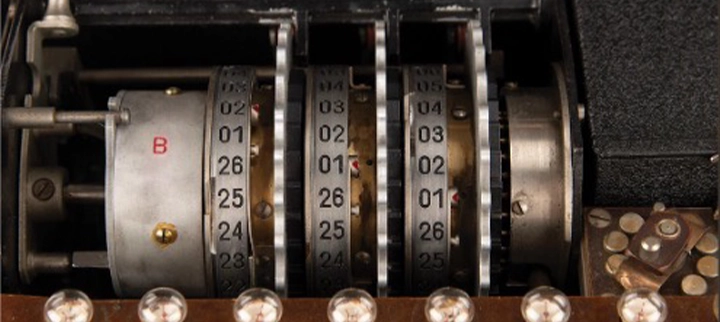
The University's Special Collections and Art Collection together constitute a research-focused resource documenting the historical development of scientific, mathematical, and technological knowledge, and its cultural interpretation through artistic practice. Spanning early astronomy and mathematics, natural philosophy, experimental science, mechanical calculation, and the emergence of computation, the collections approach knowledge as both an intellectual tradition and a material practice.
The Special Collections comprise rare books, scientific instruments, and early computer hardware that record how scientific ideas were formalized, tested, calculated, and applied across different historical periods.
The Art Collection offers a complementary perspective through works by artists who have engaged with geometry, systems, calculation, machines, natural sciences and digital processes.
Taken together, the collections provide an intellectual and material framework for the University's research and teaching, situating contemporary work in AI within a longer history of mathematical reasoning, experimental practice, and machine-based methods. The collection is open to scholarly research and engagement. For further information, contact: jasmine.soliman@mbzuai.ac.ae
MBZUAI's Special Collections brings together rare books, scientific instruments, and early computer hardware that document the development of scientific, mathematical, and technological knowledge from antiquity to the modern era. The collection centers on foundational texts in astronomy, mathematics, natural philosophy, and the sciences, alongside objects that demonstrate how knowledge was measured, tested, calculated, and put into practice.
Early printed works trace the history of mathematical reasoning, scientific method, and empirical inquiry, while instruments such as navigational, astronomical, and calculating devices reveal the practical conditions under which scientific knowledge was produced and applied. Together, these objects show science not only as a body of theory, but as a set of techniques, tools, and systems.
The collection also includes early computing and information-processing hardware placing contemporary computation within a longer history of automation, formal logic, and mechanical calculation. In this way, the Special Collections provide historical context for MBZUAI, positioning its research and teaching within a lineage that links early mathematical reasoning, experimental science, and mechanical calculation to present-day work in AI, grounding us within a long history of human inquiry, experimentation, and reasoning.
The collection is open to scholarly research and engagement. For further information, contact: jasmine.soliman@mbzuai.ac.ae
Saphea (Universal Astrolabe)
Brass
Al-Andalus (Moorish Spain)
1250 CE / 648 H
Shahr Mukhtaṣar al-Ṣalāḥī fī ʿilm al-ḥisāb
Shams al-Din Muhammad al-Khatibi
Eastern Azerbaijan
1383 CE / 785 H
Aristotle, Opera
Aristotle (384-322 BC)
Printed 1495 CE
Venice
La Geografia (The Geography)
Claudius Ptolemaeus (Ptolemy)
Giacomo Gastaldi - cartography
Girolamo Ruscelli - translation
Venice
1561 CE
The Mathematicall Jewell
John Blagrave
England
1585 CE
The Description and Use of Two Arithmetick Instruments
Sir Samuel Morland
London
1673 CE
The Mathematical Principles of Natural Philosophy
Isaac Newton; Andrew Motte
London
1729 CE
Machines for Comparing Ideas
Semyon Nikolaivich Korsakov
1832
Automatic Chess Player
Torres Quevedo; Leonardo
1915
MBZUAI's collection brings together the work of pioneering artists whose practices intersect science, mathematics, technology, and artificial intelligence, tracing a lineage from early 20th-century abstraction to contemporary digital and computational art. Spanning drawing, painting, sculpture, photography, light works, sound objects, and digital media, the collection highlights how artists have incorporated algorithms, data, systems, and machines as creative tools, often working closely with emerging technologies of their time – simultaneously pushing scientific and experimental boundaries.
It features internationally recognised figures such as Ella Bergmann-Michel, whose work investigates themes of physics and mathematics, and Samia Halaby, whose rigorous engagement with geometry, motion, and systems thinking bridges abstraction, political consciousness, and later computational approaches. These earlier works sit alongside those of foundational computer and algorithmic art including Frieder Nake, Vera Molnár, Georg Nees and Yoshiyuke Abe. Many early pioneers were multidisciplinary and combined artistic practice with engineering, mathematical and scientific research.
More recent works by artists such as Christiane Maurer, Wang Ningde, and Daniel Ambrosi extend these ideas into the present, engaging with digital processes, software, light, and environmental data. Together, the collection offers a compelling introduction to how artistic practice has anticipated, responded to, and shaped today's computational culture.
The collection is open to scholarly research and engagement. For further information, contact: jasmine.soliman@mbzuai.ac.ae
Plus-Minus-Zeichnung
Ella Bergmann-Michel
1925
Heartbeat of a Frog
Frank Malina
1956
Plotter drawing, Ink on paper
Frieder Nake
1938
Near or Far
Samia Halaby
1971
Untitled
George Nees
1971
Campo de Criptana
Jean-Pierre Hébert
1988
2020 V
Christiane Maurer
2020
Legends Series
Yoshiyuke Abe
1992
Chatsworth Arcade
Daniel Ambrosi
2025
